Wednesday, October 21, 2015

 
Web Quest
Today we explored another avenue of learning: Web Quest! When I think of Web Quest, I think of a maze because it involves a lot of thinking and movement from one place to another. The goal is to go from the beginning of the assignment to the end, or from the entrance of the maze to the exit. Web Quest will be challenging and thought provoking because of its multiple layers that go into its formation. I think that I will be all worth while because learning is not a one-time isolated experience! It needs to be layered, comprehensive and repetitive for it to have value.

Wednesday, October 14, 2015

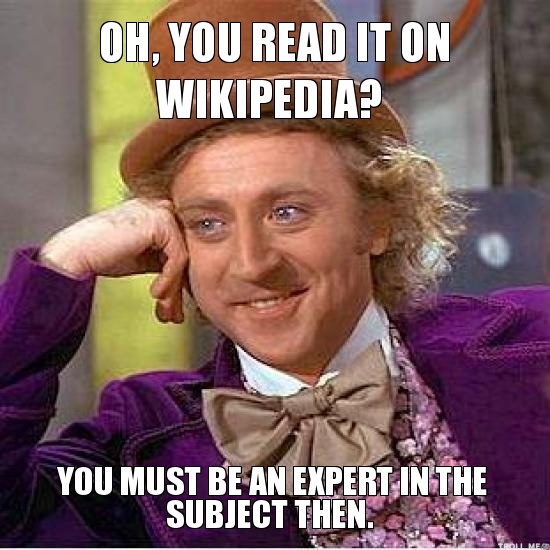
       Today, we had an in depth discussion about the trustfulness of the internet. We see all this false information being spread around and it becomes so difficult to differentiate between what to trust and what to ignore. For example, many of us share "articles" on Facebook about social issues...but how many of them actually have ground and evidence? That is the center question that we modern 21st century educators will have to answer.

      I was quite pleasantly surprised with the things that I learned about Wikipedia today. For example, the website actually keeps tabs on how many edits a page goes through and for some pages, they are not accessible for the public to edit. I am impressed that Wikipedia is taking measures to ensure web safety and truthfulness, but can I would still only use it for quick research, not academic purposes.

Wednesday, October 7, 2015

Oct 7-My take-away


Today, I learned and relearned a lot about the component of true learning. What does real learning look like? That was the question that our class was centered on. There are various answers to that question but it seems that most of us and the behavioral theorists would agree that learning means that there is a change in knowledge and behavior.
   For us to effectively learn anything, we have to use our senses to engage our attention. Next, we encode that learned information into our short term memory. If our long term memory is successful, we can pull up that information whenever we need.
    These theories will be useful in the real word, especially because I will work with special needs children. I mentioned that my student had an intellectual disability that hindered her short term and long term memory. As the years go by and a student goes into the higher grades, they need to recall longer, more complex pieces of information to use on a test, or apply to other situations. In this student's case, I had to take into accounts the theories of learning but also accept her unique conditions; So I would shorten definitions and information so she could remember things better. The classroom teacher hung up many charts around the room for her to reference. These are all tools that can aid memory and learning.