
Wednesday, December 2, 2015

Chapters 10/11

I am actually taking a class on UDL lesson plans right now and I am happy that we will also be learning about them in this class. UDL lesson plans are a universal design for learning-okay, I know what you are thinking- "What are differentiation? Not all students think and learn alike!" However, that's the beauty of UDL lessons- they are based on brain research and heavily founded on the principles of unlocking a student's achievement through engagement, representation and expression. I believe the concept is actually very simply, but just difficult to implement and reinforce and of course, being a teacher, there are only so many hours of the day...which is why the incorporation of technology can help this process along.
Simply teaching via lecturing is not enough; some students need the added support of a visual or auditory aid to color the experience-I know that I am certainly one of those students (I really could not get through math and physics when I was in formal school because a lot of those concepts were abstract and I relied on literal thinking, which is why pictures, models, videos and audios would have helped). So needless to say, it would have benefited me (and other students) much more had my teachers allows us other outlets and media for learning. Simply listening to a lecture and reading from a text book is a very isolating experience and from my perspective, is not conducive to learning. I can only predict that the coming generation will also face similar problems (as we discuss in our class debate about whether or not millennials can still learn via traditional methods).
In short, I believe that since time has passed and technology has advanced so much, if we have the money and the resources, we should invest in it to help color the learning experiences of our pupils. If not, then we are just depriving them,

1. Assessment is a crucial process that drives instruction-are there tools out there that could make this process easier?
2. What about resources such as the Khan Academy movies?
3. Bill and Melinda Gates started a movement where they uploaded free downloadable textbooks for students because they knew how expensive they can get. What does this say about the future of technology in regards to collegiate education?
Wednesday, November 11, 2015
Assistive Technology
Today, we had an in depth discussion about the uses of assistive technology. I learned that
It's important to remember that just because something is not electronic does not mean that is a technology. For example, I know a student who has severe ocular issues that affect his vision and focus, so anything that he does that involves his eyes will be hindered. During writing, his letters are so scrambled and inconsistent-sometimes they're pressed together or spaced too far apart; So, his occupational therapist gave him a spacing tool that looks like a hand held ruler with a piece pointing out that acts as a tool that physically reminded him when and there to space.
Today, we had an in depth discussion about the uses of assistive technology. I learned that
- Everyone of us needs or uses assistive technology regardless of whether or not we have special needs.
- Assistive technology can be individualized to the individual (since people with special needs are so unique).
It's important to remember that just because something is not electronic does not mean that is a technology. For example, I know a student who has severe ocular issues that affect his vision and focus, so anything that he does that involves his eyes will be hindered. During writing, his letters are so scrambled and inconsistent-sometimes they're pressed together or spaced too far apart; So, his occupational therapist gave him a spacing tool that looks like a hand held ruler with a piece pointing out that acts as a tool that physically reminded him when and there to space.
Chapter 7 & 8
 Many of us have experienced the struggle as a teacher: how do I make this (insert boring topic) come alive?
It's becoming more and more of a reality that catching a student's attention even for a brief second can be incredibly demanding, especially if you are in the field of special education, where attention deficits and uncontrolled impulses are very prevalent.
Since the introduction of technology into education, so much has changed in terms of attaining resources and information. Now, students can even "Dial-A-Teacher" or use online tutoring softwares to help with their homework. This is especially helpful for those students who may come from working class or immigrant families who simply cannot get the help from home-This is only one of the many changing facts of society now; We are faced with more immigrants and working class families. When you look at it from a small scale, these changes can affect family and school life; so i think we are lucky to have these technologies.
A really interesting thing I have learned as a special educator and use of the Apple products is that there are so many Apps out there now that can aid students with special needs! Regardless of whether your child needs early intervention, has autism, speech and language impairments, there is an app of anything and everything out there! I have recently discovered that there is even an app for dyslexia!
In conclusion, I do stand behind the integration of technology in education. Of course, it has to be implemented properly and correctly. In addition, we also have to consider factors such as unique learning styles. It is great that we have so many options of which educational apps and software to use, but one size doesn't fit all and therefore, not every app and software will be useful for every child.
It's becoming more and more of a reality that catching a student's attention even for a brief second can be incredibly demanding, especially if you are in the field of special education, where attention deficits and uncontrolled impulses are very prevalent.
Since the introduction of technology into education, so much has changed in terms of attaining resources and information. Now, students can even "Dial-A-Teacher" or use online tutoring softwares to help with their homework. This is especially helpful for those students who may come from working class or immigrant families who simply cannot get the help from home-This is only one of the many changing facts of society now; We are faced with more immigrants and working class families. When you look at it from a small scale, these changes can affect family and school life; so i think we are lucky to have these technologies.
A really interesting thing I have learned as a special educator and use of the Apple products is that there are so many Apps out there now that can aid students with special needs! Regardless of whether your child needs early intervention, has autism, speech and language impairments, there is an app of anything and everything out there! I have recently discovered that there is even an app for dyslexia!
In conclusion, I do stand behind the integration of technology in education. Of course, it has to be implemented properly and correctly. In addition, we also have to consider factors such as unique learning styles. It is great that we have so many options of which educational apps and software to use, but one size doesn't fit all and therefore, not every app and software will be useful for every child.
Wednesday, October 21, 2015

Web Quest
Today we explored another avenue of learning: Web Quest! When I think of Web Quest, I think of a maze because it involves a lot of thinking and movement from one place to another. The goal is to go from the beginning of the assignment to the end, or from the entrance of the maze to the exit. Web Quest will be challenging and thought provoking because of its multiple layers that go into its formation. I think that I will be all worth while because learning is not a one-time isolated experience! It needs to be layered, comprehensive and repetitive for it to have value.
Wednesday, October 14, 2015
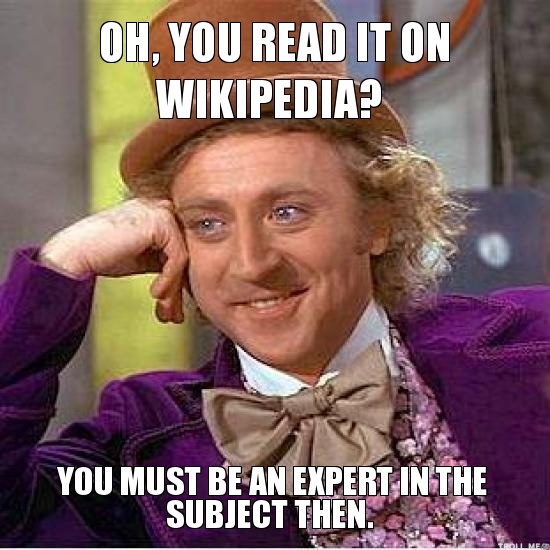
I was quite pleasantly surprised with the things that I learned about Wikipedia today. For example, the website actually keeps tabs on how many edits a page goes through and for some pages, they are not accessible for the public to edit. I am impressed that Wikipedia is taking measures to ensure web safety and truthfulness, but can I would still only use it for quick research, not academic purposes.
Wednesday, October 7, 2015
Oct 7-My take-away
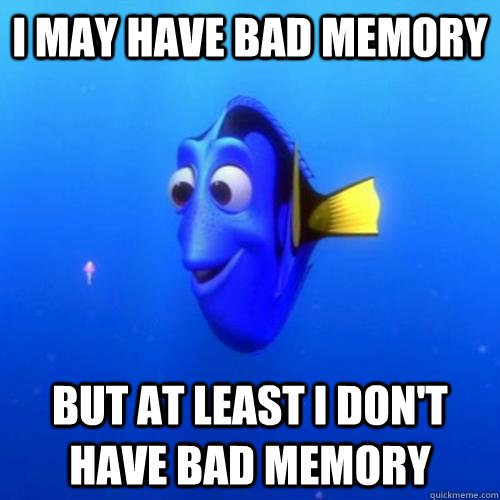
Today, I learned and relearned a lot about the component of true learning. What does real learning look like? That was the question that our class was centered on. There are various answers to that question but it seems that most of us and the behavioral theorists would agree that learning means that there is a change in knowledge and behavior.
For us to effectively learn anything, we have to use our senses to engage our attention. Next, we encode that learned information into our short term memory. If our long term memory is successful, we can pull up that information whenever we need.
These theories will be useful in the real word, especially because I will work with special needs children. I mentioned that my student had an intellectual disability that hindered her short term and long term memory. As the years go by and a student goes into the higher grades, they need to recall longer, more complex pieces of information to use on a test, or apply to other situations. In this student's case, I had to take into accounts the theories of learning but also accept her unique conditions; So I would shorten definitions and information so she could remember things better. The classroom teacher hung up many charts around the room for her to reference. These are all tools that can aid memory and learning.
Today, I learned and relearned a lot about the component of true learning. What does real learning look like? That was the question that our class was centered on. There are various answers to that question but it seems that most of us and the behavioral theorists would agree that learning means that there is a change in knowledge and behavior.
For us to effectively learn anything, we have to use our senses to engage our attention. Next, we encode that learned information into our short term memory. If our long term memory is successful, we can pull up that information whenever we need.
These theories will be useful in the real word, especially because I will work with special needs children. I mentioned that my student had an intellectual disability that hindered her short term and long term memory. As the years go by and a student goes into the higher grades, they need to recall longer, more complex pieces of information to use on a test, or apply to other situations. In this student's case, I had to take into accounts the theories of learning but also accept her unique conditions; So I would shorten definitions and information so she could remember things better. The classroom teacher hung up many charts around the room for her to reference. These are all tools that can aid memory and learning.
Subscribe to:
Posts (Atom)